
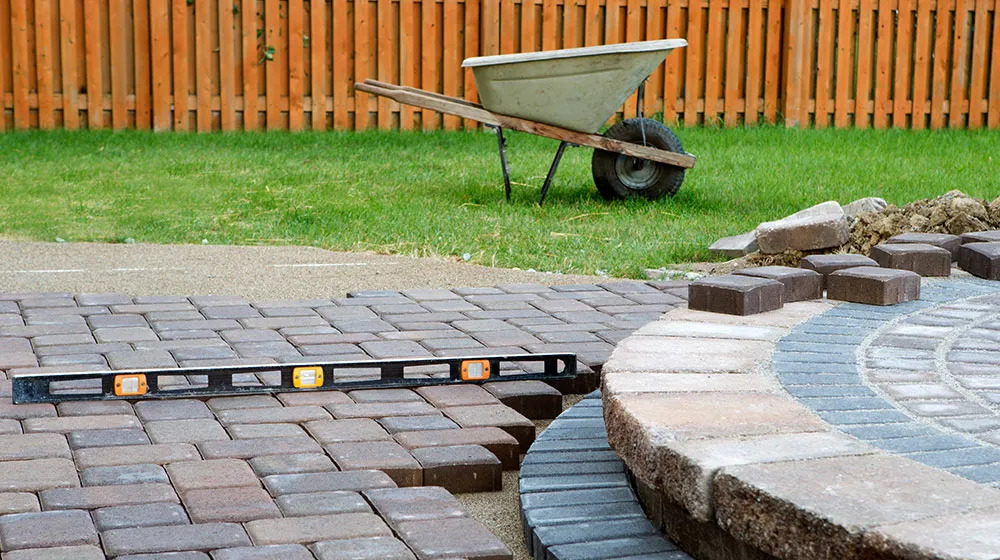
To build a patio with pavers in 7 easy steps, you’ll start by selecting and marking a level, well-drained area.
Then, excavate about 8–10 inches deep, removing grass and compacting the soil.
Next, lay landscape fabric to block weeds and add a 6–8 inch crushed stone base, compacting it firmly.
Spread and level a 1-inch sand layer before carefully cutting and laying pavers.
Secure edges with edging and fill joints with polymeric sand.
Keep going to discover tips ensuring a flawless finish.
Key Takeaways
- Select and mark a level, well-drained patio area using stakes and string, allowing extra space for edging.
- Excavate the site 8–10 inches deep, removing topsoil, and compact the soil to create a stable base.
- Lay landscape fabric to prevent weeds, then add and compact 6-8 inches of crushed stone or gravel base.
- Spread and level about one inch of coarse sand over the base, mist with water, and compact it smoothly.
- Cut pavers to fit, lay them tightly with proper alignment, fill gaps with polymeric sand, and install edging for stability.
Select and Mark Your Patio Area
To start building your patio, pick a spot that’s level and drains well to avoid water pooling. This guarantees a solid foundation for your pavers, essential for long-lasting patio installation. Once you’ve found the ideal location, use stakes and string to outline the area.
Focus on marking corners precisely to visualize the layout and confirm dimensions. Make certain to extend the marked area at least 6 inches beyond your intended patio size to accommodate edging and base materials. Before proceeding, check local zoning and building codes to guarantee your patio complies with regulations.
Clear the marked space of grass, weeds, and debris so it’s ready for the next steps. Proper selection and marking set the stage for a smooth patio installation process.
Excavate and Prepare the Ground
Before you start digging, make sure to call 811 at least 48 hours ahead to locate any underground utilities in your patio area.
To properly excavate and prepare the ground, you’ll want to:
- Clear the area by removing grass, weeds, and topsoil, creating a clean, level surface.
- Dig 8–10 inches deep, extending 6 inches beyond your patio edges to allow for edging installation.
- Use a plate compactor to firmly compact the soil beneath, ensuring a solid base that prevents shifting or settling.
Taking these steps helps you avoid costly mistakes like uneven surfaces or damaged utilities.
Install Landscape Fabric and Base Material
A critical step in building your patio is installing landscape fabric and a stable base layer. Start by laying landscape fabric over the excavated area to prevent weed growth and promote proper drainage. Secure it with landscape staples or stakes, making sure it covers the entire surface.
Next, add 6-8 inches of base material, like crushed stone or gravel, to provide a solid foundation and enhance drainage. Spread the base material evenly, sloping it slightly away from any structures to avoid water pooling. Use a plate compactor to thoroughly compact the base material, ensuring it’s stable and level.
This preparation creates a durable base that supports your pavers and prevents future issues with settling or poor drainage.
Spread and Level Sand Bedding
Once your base material is compacted and level, the next step is spreading a layer of coarse sand about one inch thick over the surface. This sand bedding provides a smooth, stable foundation for your pavers. To get it just right, follow these steps:
- Spread the sand evenly using a rake, ensuring there are no bumps or dips that could affect the paver placement.
- Use a straight edge or long board to level the sand, checking for consistent thickness across the entire area.
- Lightly mist the sand with water and compact it with a plate compactor or hand tamper to create a firm, stable bedding.
Taking care to spread and level your sand bedding properly sets you up for a successful patio installation.
Cut and Lay the Pavers
Now it’s time to cut the pavers to fit your patio shape using the right tools, like a circular saw or hammer and chisel for smaller cuts.
You’ll want to start laying them along the edges, placing each paver tightly together to create a solid pattern. Keep an eye on their height and alignment as you go to guarantee a smooth, even surface.
Paver Cutting Techniques
Cutting pavers accurately is essential for achieving a professional-looking patio, and you’ll want to choose the right tools and techniques. Before you start, measure and mark the pavers carefully to fit around your paver edging and other features.
Here’s how to cut pavers effectively:
- Use a circular saw with a diamond blade for clean, precise cuts. This tool helps you cut pavers quickly and neatly.
- For fewer cuts or rough shaping, a hammer and chisel work well, but they require more effort and skill.
- After cutting, place each paver and use a level to check its fit and stability, making adjustments as needed.
Always wear safety glasses and a dust mask to protect yourself while cutting.
Proper Paver Placement
Start by laying the first row of pavers along the patio’s perimeter, using low strings to keep them straight and tightly packed. Proper paver placement is essential to achieve a level, stable surface.
As you lay pavers inside the border, use a rubber mallet and level to adjust height and alignment. When you encounter edges or odd spaces, cut pavers with a diamond blade saw or hammer and chisel for precision.
Once all pavers are placed, fill gaps with polymeric sand, sweeping it into joints and compacting with a hand tamper for stability. Finally, install metal edging around the patio’s border, securing it with spikes every 12 inches.
Having the right tools and materials on hand makes the entire process smoother and guarantees a long-lasting patio.
Install Edging to Secure the Patio
To keep your patio pavers from shifting and guarantee they stay aligned, you’ll need to install edging around the perimeter. This step is essential to secure the patio and prevent any paver shifting over time.
Here’s how to do it effectively:
- Choose a durable outdoor edging material like plastic, steel, or concrete that suits your patio’s use.
- Install edging by placing it tightly against the outer pavers and securing it with spikes or landscape nails every 12 inches.
- Bury the edging slightly in the base material for extra stability and a seamless look.
If you want an aesthetic touch, natural stone coping can serve as an attractive yet solid barrier.
This guarantees your patio stays sturdy and beautiful for years.
Fill Joints and Compact the Surface
Once your pavers are laid and edged, you’ll need to fill the joints with polymeric sand to lock them in place and prevent weeds from growing through. Spread the sand evenly, then use a push broom to fill joints thoroughly.
Next, mist the surface to activate the sand, which hardens to create a stable surface. Finally, compact the surface with a plate compactor to embed the sand firmly. Let the sand cure for 24 hours before using your patio.
| Step | Purpose |
|---|---|
| Spread polymeric sand | Fill joints |
| Sweep with broom | Guarantee complete joint filling |
| Mist with water | Activate polymeric sand |
| Compact the surface | Create a stable, level surface |
Frequently Asked Questions
How to Make an Easy Paver Patio?
To make an easy paver patio, clear the area, dig deep, lay a gravel base, set perimeter pavers, fill inside, level them, add joint sand, compact it, and install edging.
Let it cure before use.
Do I Need to Put Anything Under Pavers?
You’ve got to lay a strong foundation under your pavers, like a sturdy backbone. Use gravel for stability, sand for leveling, and polymeric sand between stones to lock them in place and keep weeds at bay.
How to Lay a Patio for Beginners Step by Step?
You start by digging out the area, then lay a gravel base. Next, place the perimeter pavers level, fill in the center, sweep polymeric sand into joints, tamp it down, and install edging for stability.
Is It Cheaper to Build a Patio With Pavers or Concrete?
You’ll find concrete patios usually cost $6 to $15 per square foot, making them cheaper initially than pavers, which run $10 to $30.
However, pavers last longer and repair easier, often saving you money over time.
Conclusion
Building your patio is like planting a garden—you start by choosing the perfect spot, then gently prepare the soil beneath. Each paver is a seed you lay with care, creating a pattern that will bloom into beauty.
Edging keeps your garden safe, while filling the joints is like watering the roots, helping everything settle strong. With patience and love, you’ll watch your outdoor space grow into a lasting place of comfort and joy.

Hi, I’m Md Rofiqul, a gardening enthusiast who loves spending time in the garden and backyard. I enjoy caring for plants, growing flowers and vegetables, and creating a green space that feels peaceful and refreshing. Gardening is more than just a hobby, it’s a passion that connects me to nature and brings joy to my daily life. Living with plants inspires me to embrace simplicity, patience, and sustainability while making every day more colorful and rewarding.